

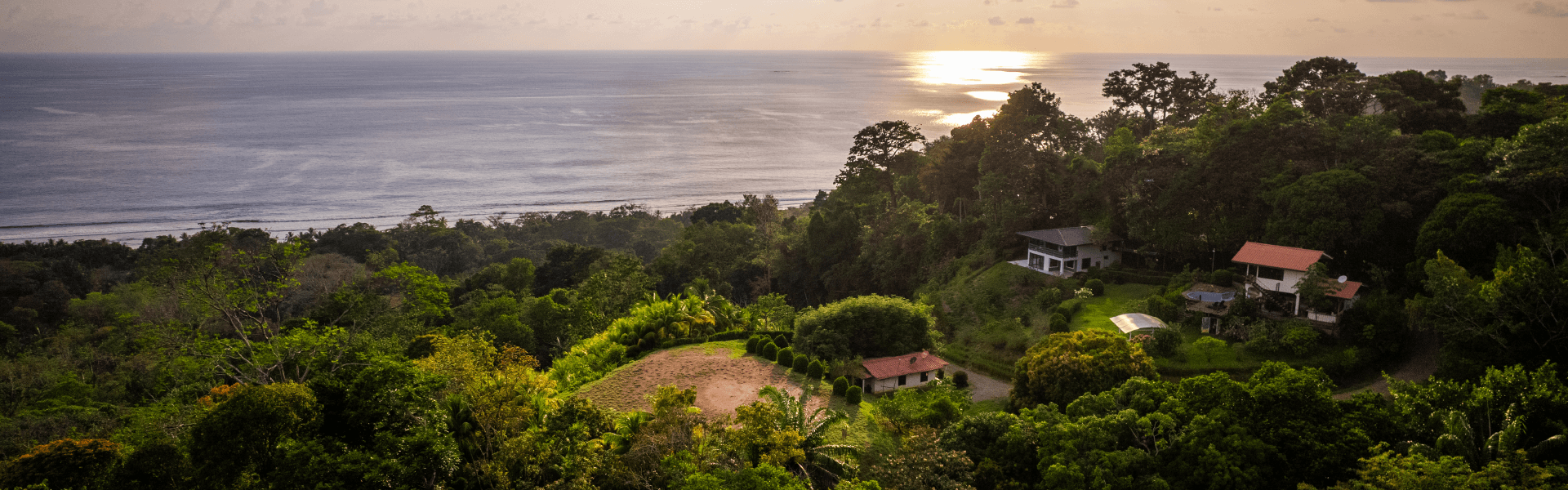
Buying land in Costa Rica gives you something a finished home simply can’t: the opportunity to shape the property around your own vision from the beginning. That might mean building a private ocean-view residence above Dominical, creating a boutique development in Ojochal, designing a luxury estate overlooking Uvita’s Whale’s Tail, or holding significant acreage for conservation, wellness, hospitality, or long-term investment.
But land is also a very different purchase from an existing home. You’re not only evaluating what’s there today; you’re evaluating what can realistically be created there tomorrow. In Costa Rica especially, that means looking closely at title, legal water, access, infrastructure, topography, permitting, development potential, and ultimately whether the land truly supports what you want to do with it.
At Coldwell Banker Vesta Group, we’ve spent more than 20 years working across Costa Rica’s Southern Zone, watching communities grow, infrastructure improve, and once-overlooked areas develop into some of the country’s most desirable residential and investment markets. That experience has taught us something important: two beautiful parcels can look equally compelling on paper but still represent very different propositions.
As an international buyer, understanding those differences before you purchase is essential. Our role is to help you look beyond the view, the acreage, and the emotional pull of the property so you can understand what you’re actually buying, what it can support, and whether it aligns with your larger goals.
Why Investors Are Looking at Land in Costa Rica's Southern Zone
Part of the appeal of buying land in Costa Rica’s Southern Zone is simply the range of possibilities. Along a relatively connected stretch of the Southern Pacific, you can move from surf towns and established coastal communities to private mountain settings, larger rural parcels, and development opportunities with very different price points and end uses.
Dominical, Uvita, and Ojochal are all part of the broader story, but they’re not interchangeable. Here’s a (very) brief overview of each:
Dominical has long-standing international recognition, strong surf culture, and dramatic hillside terrain where ocean-view homesites and larger parcels continue to attract lifestyle buyers, developers, and investors who want proximity to one of the Southern Pacific’s best-known beach communities.
Uvita has grown into one of Costa Ballena’s primary commercial and lifestyle hubs. For buyers, that means access to services, restaurants, schools, beaches, Ballena National Marine Park, and a broader year-round community, alongside opportunities ranging from residential homesites to larger luxury and development parcels.
Ojochal tends to feel more residential and tucked away, with an established international community, a well-known dining scene, and convenient access to beaches and natural attractions. The town can be especially appealing if you’re looking for a private homesite, a smaller hospitality concept, or land that balances lifestyle with long-term investment potential.
This is all important because in the Southern Pacific, opportunity isn’t simply about acquiring acreage; it boils down to identifying the parcel where location, access, infrastructure, development potential, and long-term demand come together in a way that supports – aesthetically but also logistically and legally – what you actually want to create.
What International Buyers Should Evaluate Before Buying Land
This is where buying land gets more nuanced. A spectacular view or a large acreage number can be compelling, but neither tells you whether the property can actually support what you have in mind.
Before you buy, you need to understand not just the land itself, but the legal, physical, and practical conditions that will shape what you can do with it. In Costa Rica, that means looking carefully at several factors before you get too far into the emotional side of the decision.
Title and Ownership
Start with the fundamentals. Is the property fully titled, and does the registered information match what you believe you’re buying?
This is where a great real estate team – agent and attorney – comes into play. A proper title search should be part of your legal due diligence, giving you a clear picture of ownership, registered boundaries, liens, easements, and other recorded conditions that could affect the property. This isn’t the place to make assumptions, especially when you’re purchasing from abroad.
Legal Water
Water deserves particular attention because having water on or near a property is not the same thing as having a legally recognized water source that supports development.
A stream, spring, creek, or nearby water line may look reassuring, but you still need to confirm what the legal water source is, whether the necessary rights or availability exist, and what that means for your intended project. If you’re evaluating build-ready land in Costa Rica, this is one of the first questions we want answered.
Access and Public Road Frontage
How you access the property matters, and not just for convenience.
You need to understand whether access is public or private, what legal rights exist over that access, and whether the property has the road frontage required for what you eventually want to build. A private residence, subdivision, hospitality project, or commercial development may each carry very different requirements.
Access can also affect resale value. A beautiful property that’s difficult to reach, poorly documented, or limited by its frontage may appeal to a much narrower future buyer pool than one with straightforward legal and physical access.
Electricity, Internet and Infrastructure
Next, look at what already reaches the property and what you’d need to bring in yourself.
Is electricity available at the property line? What about internet? How far are existing utilities from your intended building site? If infrastructure needs to be extended, what will that realistically cost?
These questions become even more important as parcels get larger or more remote. The purchase price is only one part of your eventual investment, and infrastructure can materially change the economics of a project.
Topography and Buildable Area
Acreage alone can be misleading.
Ten acres of steep hillside is a very different development proposition from ten acres with multiple usable building sites. Before purchasing, you want to understand slopes, drainage, soil conditions, access between potential building areas, and the practical cost of preparing the land.
This is particularly important in the Southern Zone, where some of the most spectacular ocean and mountain views naturally come with more dramatic terrain. The question is not simply how much land you’re buying, but how much of it supports your intended use.
Zoning, Environmental Restrictions and Permitting
This is another area where you want to work backward from your goal.
If you’re planning a private residence, that’s one conversation. But if you’re considering subdivision, a boutique hotel, a wellness retreat, or a larger development, that’s another entirely. Environmental restrictions, setbacks, permitting requirements, and allowable uses can all affect what’s legal and realistic.
The time to understand those limitations is before you buy, not after you’ve already committed to a property and begun designing around an idea that may not be feasible.
Your Exit Strategy
Finally, think beyond the purchase itself.
Are you buying to build and live there? Develop and sell? Operate a hospitality business? Hold the land for long-term appreciation? Preserve it? Create something your family can keep for generations?
Your answer should influence the property you choose from the beginning. The right land for a private residence may not be the right land for a development project, and the best conservation or legacy property may look very different from a parcel purchased primarily for near-term financial return.
That’s ultimately why land due diligence in Costa Rica needs to be tied to your intended outcome: You’re not just asking, “Is this a good property?” You’re asking, “Is this the right property for what I want to do?”
Five Southern Zone Land Opportunities to Consider
The diversity of Costa Rica land for sale becomes much easier to understand when you look at actual properties side by side. These five opportunities are more than different listings at different price points; they’re very different ways to approach land ownership and investment in the Southern Zone.
Some are relatively straightforward homesites. Others are larger development opportunities. And at the upper end of the spectrum, land can become something more ambitious: a hospitality concept, a conservation property, or a long-term legacy asset.
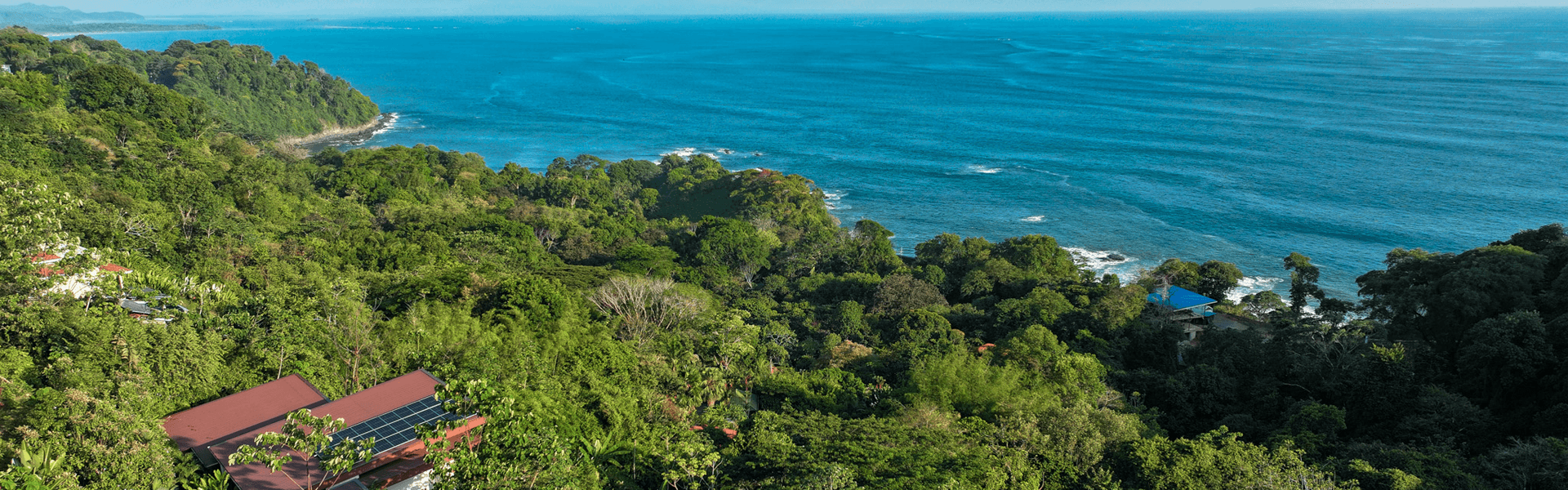
Enclave Dominical Parcel Five – Build-Ready Luxury Homesite in San Martín
Dominical | 1.24 Acres | $325,000
Enclave Dominical Parcel Five offers a very different kind of opportunity from larger development acreage. The homesite sits within a gated community in San Martín, just five minutes from the Costanera Highway, and combines ocean-view potential with privacy, year-round access, and infrastructure already in place.
The lot’s water availability, electricity to the site, established easements, and 24/7 monitored access remove some of the uncertainty that often comes with buying raw land. If you’re looking to create a luxury private residence, vacation home, or long-term hold without taking on the complexity of a large-scale development parcel, this is a much more focused proposition.
The investment case here is really about readiness, location, and scarcity. You’re buying into an established Dominical-area community with convenient access to beaches, restaurants, waterfalls, and the broader Costa Ballena corridor, while still securing the privacy and setting that buyers increasingly look for in the Southern Zone.
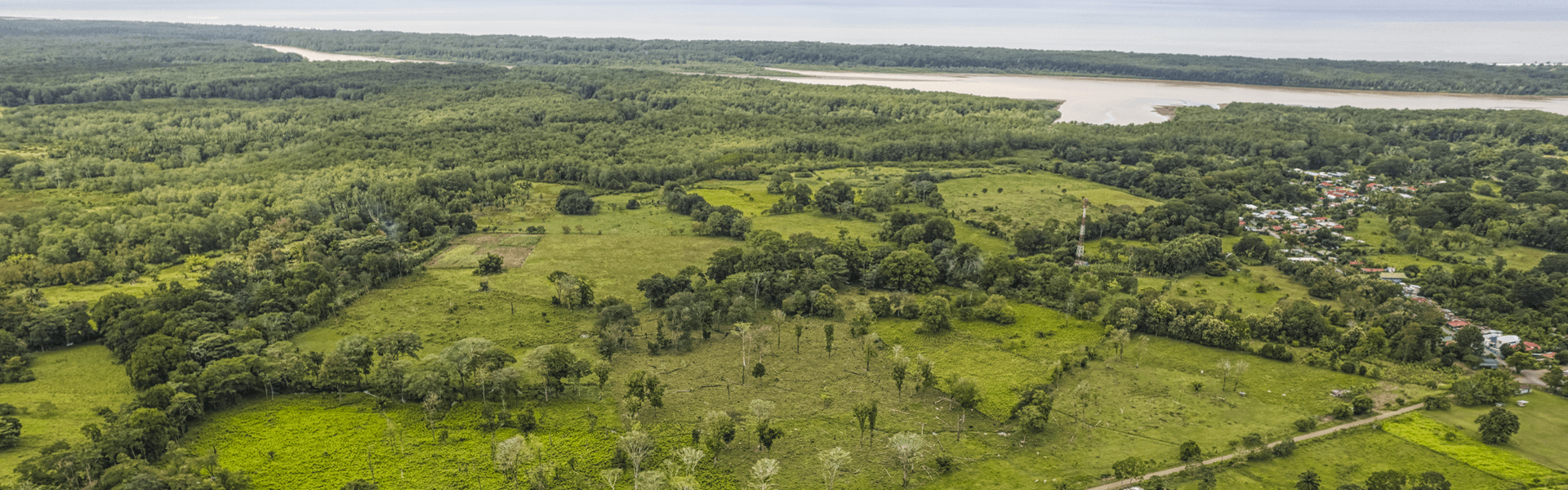
Coronado Estates Lot 5 – Accessible Entry into the Ojochal Market
Ojochal | 1.75 acres | $225,000
This property represents a very different kind of land investment. It already includes a large buildable pad, mature fruit trees, and city water, giving you a more approachable starting point for a private tropical residence, vacation home, or smaller hospitality concept.
There’s also the possibility of combining it with neighboring Lot 6 for additional acreage and ocean views, which gives you room to think beyond the immediate homesite if your plans evolve.
What makes this kind of property interesting is its relative simplicity. You’re not taking on a sprawling development parcel or trying to create an entire destination from scratch. Instead, you’re dipping your toes into the Ojochal market with land that may support a more focused, manageable vision while still benefiting from the community, tourism appeal, and lifestyle demand around it.
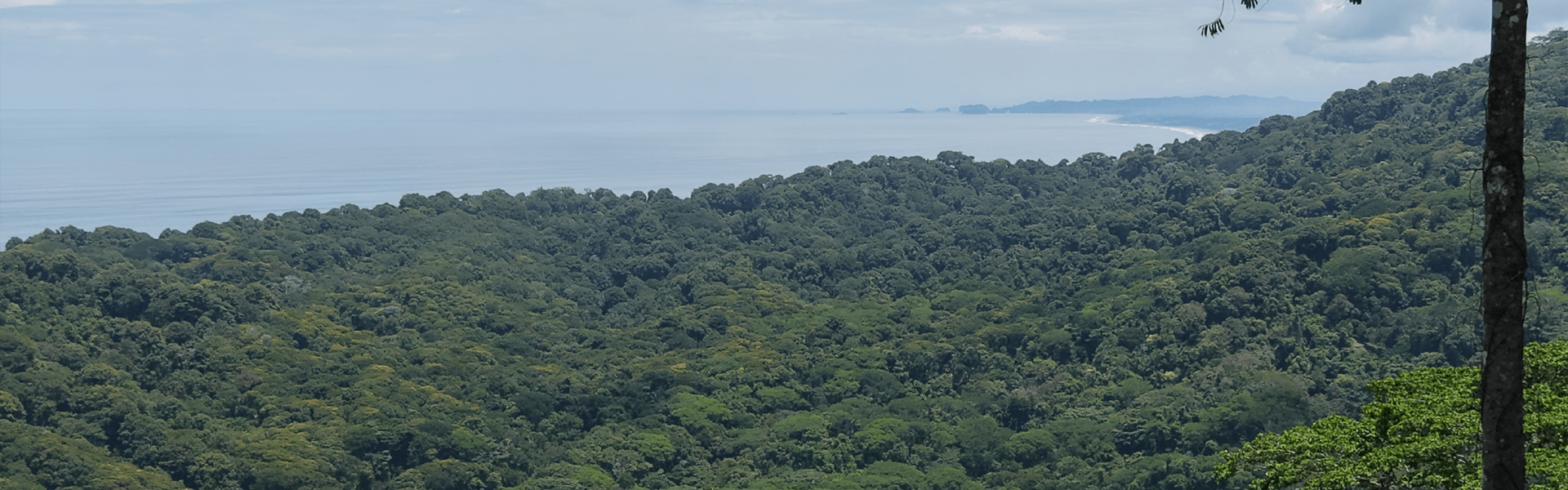
Vista Dominical Estates Lot #17 – Premium Ocean-View Homesite
Dominical | 1.28 Acres | $575,000
This parcel is a useful reminder that land value is not always about buying the greatest possible amount of acreage.
Located at the end of the road within Vista Dominical Estates, the homesite offers an elevated position, ocean and sunset views, privacy, and proximity to Dominical’s beaches, restaurants, and surf. Electricity is available at the property line, while the community has a freshwater well with individual water concessions.
For the right buyer, that combination is inherently valuable. This is the kind of property where your investment thesis rests on location, view protection, infrastructure, privacy, and access to an already established destination. If your goal is a luxury custom home or premium second residence, those qualities may matter considerably more than owning additional undeveloped acreage.
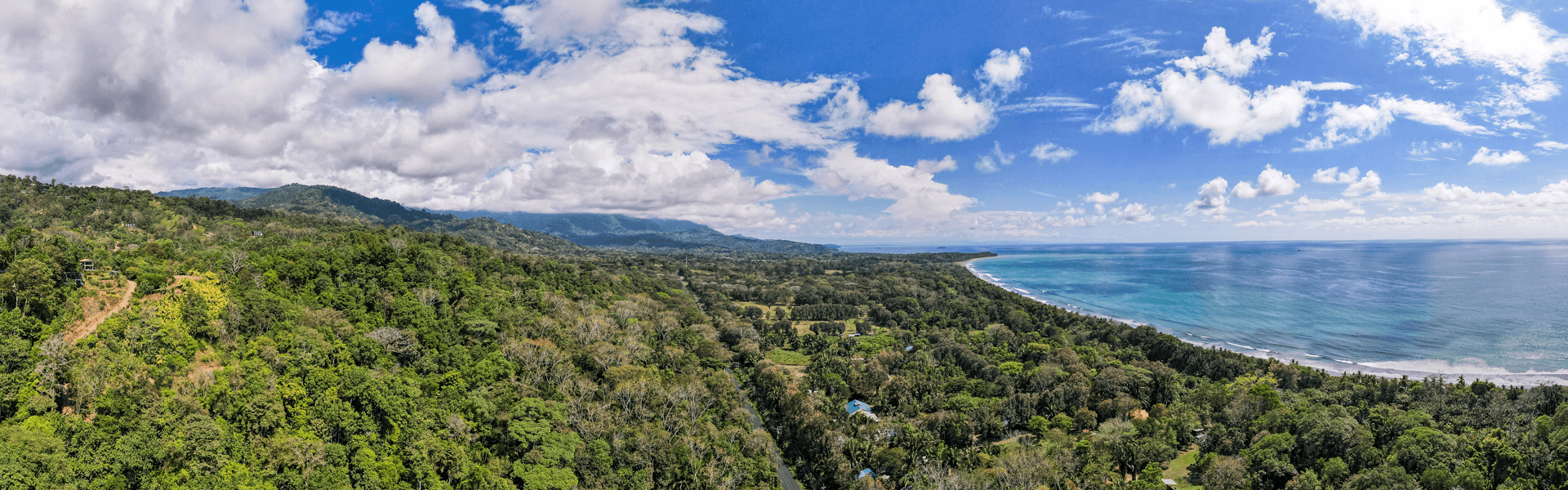
Whale's Tail View Estate – Large-Scale Luxury Opportunity in Uvita
Uvita | 10.67 Acres | $4,995,000
At the other end of the spectrum is this expansive Uvita property, where the value proposition expands well beyond a single homesite.
The property combines unobstructed Whale’s Tail views with multiple building sites, a year-round creek, an approximately 80-foot waterfall, and existing residences. Potential uses range from a private luxury estate to a boutique eco-retreat or high-end development.
For an investor, this is where exceptional natural features and development flexibility begin to work together. Multiple building sites create optionality, while the view corridor, waterfall, acreage, and proximity to Uvita give the property a very different positioning from a conventional residential lot. The question here isn’t, “Where would I build the house?” It’s, “What’s the highest and best expression of this property, and which version best aligns with my investment goals?”
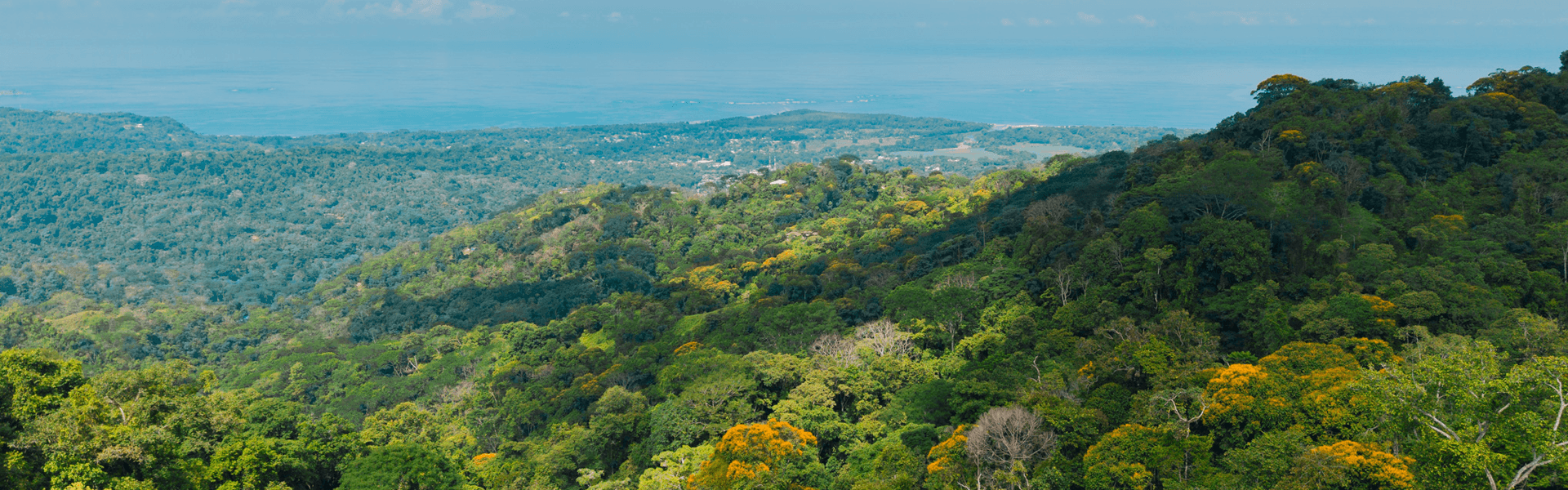
La Malouma Cloud Forest Reserve – Conservation Meets Visionary Development
Uvita | 97.87 Acres | $4,000,000
La Malouma takes the land conversation somewhere else entirely. The property combines cloud forest and rainforest, natural water resources, elevation, Pacific view corridors, and remarkable proximity to town and the coast at approximately 10 to 15 minutes away.
Potential concepts identified for the property include a private estate, wellness sanctuary, eco-lodge, conservation reserve, or low-density hospitality project. But the real significance here is not simply the list of things you could build. This is what we’d call a legacy-property opportunity, with the acreage, ecological value, water, privacy, and natural landscape to create both development and stewardship. For the right buyer, value may come not only from what’s added to the land, but also from what’s deliberately preserved.
And that’s a very different investment thesis from buying a build-ready homesite, and it’s exactly why “land for sale in Costa Rica’s Southern Zone” should never be treated as a single asset class.
From Homesite to Legacy Property: Choosing the Right Land Strategy
One of the biggest mistakes you can make when buying land in Costa Rica is treating every parcel as if it belongs in the same category. It doesn’t. A build-ready homesite in Dominical is a very different investment from significant cloud-forest acreage above Uvita, and the right choice depends on what you actually want the land to do for you.
|
Investment Goal |
Property Profile |
|
Build a private residence |
Build-ready homesite |
|
Luxury custom home |
Premium ocean-view lot |
|
Vacation rental |
Homesite with tourism proximity |
|
Boutique hospitality |
Larger parcel with multiple building sites |
|
Development |
Acreage + infrastructure + access |
|
Wellness / eco-retreat |
Large natural property with water and privacy |
|
Legacy / conservation |
Significant acreage with ecological value |
The five properties above help illustrate just how different those strategies can look in practice. This is where experienced local guidance becomes especially important. The biggest parcel isn’t necessarily the strongest investment, and the most dramatic ocean view doesn’t automatically make a property right for what you have in mind.
At Coldwell Banker Vesta Group, we look at land through the lens of your intended outcome. We want to understand what you’re trying to create first, then help you evaluate whether the property’s legal structure, infrastructure, physical characteristics, and market position actually support that vision.
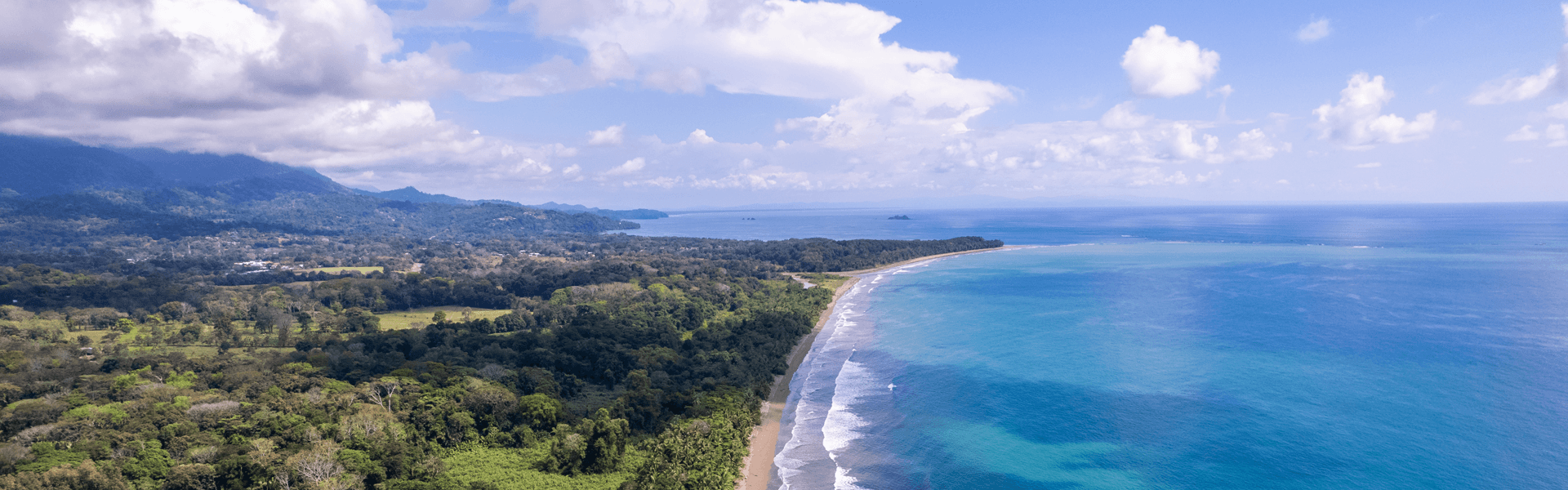
Buying Land Is About Stewardship as Much as Opportunity
Land in Costa Rica’s Southern Zone asks you to think a little differently about value.
Rainforest corridors, rivers, watersheds, elevation, wildlife, mature trees, and natural water are desirable features, but they’re also part of what makes this region extraordinary in the first place, and they contribute directly to a property’s long-term appeal.
That doesn’t mean land should never be developed. Quite the opposite, in fact: Some of the most compelling properties in the Southern Zone show what can happen when thoughtful development works with the landscape rather than against it. A home can be positioned to preserve views and mature trees. A retreat can protect natural water systems while creating meaningful guest experiences. A larger parcel can leave significant areas untouched while concentrating development where it makes the most sense.
For Vesta Group, the relationship between opportunity and stewardship has always mattered. Real estate should create long-term value, but the strongest projects also respect the communities, ecosystems, and landscapes that give that value meaning. When you buy land here, you’re acquiring acreage but you’re also taking responsibility for what happens next.
Buying the Right Land Starts With Knowing What You Want to Build
Buying land in Costa Rica can open the door to possibilities that simply don’t exist with a completed home. You can shape the architecture, decide how the property interacts with the landscape, create an income-producing project, preserve a significant natural asset, or build something intended to stay in your family for generations.
This use flexibility is exactly why due diligence matters so much. Before you buy, you need to understand title, legal water, access, topography, infrastructure, permitting, environmental considerations, and what the land can realistically support. Just as importantly, you need to understand how all of those pieces fit your own goals.
That’s where Coldwell Banker Vesta Group can help. Our team brings more than 20 years of Southern Zone experience across land acquisition, development, luxury residential property, and investment real estate. We’ll help you look beyond the acreage and the view to understand what you can actually create, what it may take to get there, and whether the opportunity makes sense for you.
Whether you’re considering a private homesite in Dominical, investment land in Ojochal, development acreage in Uvita, or a larger conservation-minded property, we’ll help you evaluate it with clarity and confidence.
Explore land for sale in Costa Rica’s Southern Zone and discover what you could build next.
Rooted in Costa Rica. Trusted Worldwide.
Frequently Asked Questions About Buying Land in Costa Rica
Can foreigners buy land in Costa Rica?
Yes. Foreign buyers can generally own titled property in Costa Rica with the same ownership rights as Costa Rican citizens. Different rules can apply to concession property within the Maritime Zone, so it’s important to confirm the property’s legal status and complete proper due diligence before purchasing.
What should I check before buying land in Costa Rica?
Before buying land in Costa Rica, you should evaluate title and ownership, legal access, legal water availability, electricity and other infrastructure, topography and buildable area, zoning, environmental restrictions, and permitting requirements. You should also confirm that the property can realistically support your intended use before completing the purchase.
Why is legal water important when buying land in Costa Rica?
Legal water is important because having a stream, spring, well, or other water source on or near a property doesn’t necessarily mean that water can legally support development. Before purchasing, confirm the property’s recognized water source, availability, and what it permits for your intended project.
Where should I buy land in Costa Rica’s Southern Zone?
Dominical, Uvita, and Ojochal each offer different advantages for land buyers. Dominical is known for its established international market, surf lifestyle, and ocean-view properties; Uvita combines coastal living with extensive services and a growing year-round community; and Ojochal offers a more residential setting with privacy, dining, and convenient access to the coast. The right location depends on whether you’re prioritizing a private homesite, vacation rental, development opportunity, tourism proximity, larger acreage, or long-term investment potential.
Can I buy land in Costa Rica and build later?
Yes. You can purchase land in Costa Rica and wait to build, but you should still establish the property’s development feasibility before buying. Confirming legal water, access, utilities, topography, zoning, environmental considerations, and permitting requirements upfront can help you avoid purchasing land that won’t support your plans later.