

Costa Rica maritime zone beachfront property works differently from oceanfront real estate in most countries. The first 200 meters from the high tide line belong to the public domain, and land inside that strip is generally held through a municipal concession, not a title. Here is how that plays out in Dominical, Uvita and Ojochal.
Most people who call us about the Southern Zone coastline start in the same place. They have seen a home a short walk from the sand in Dominical, Uvita or Ojochal, and they want to know if they can own it.
The honest answer is that it depends on where the property sits, measured in meters rather than in minutes from the beach.
Costa Rica protects its coastline through a single national law. That law has been in place since 1977, and it shapes every beachfront transaction in the country. What changes from one beach to the next is how that law meets the local map: coastal plans, river mouths, mangroves, and in Uvita, a national park.
After more than 20 years working this coast, we've learned that the buyers who enjoy the process most are the ones who understand that map first. This guide is that map.
What is the maritime zone, and how does it affect beachfront property?
The maritime zone, known locally as the Zona Marítimo Terrestre or ZMT, is a 200 meter strip measured inland from the ordinary high tide line. It was established by Law 6043 in 1977, and it is divided into two parts with very different rules.
Coldwell Banker Vesta Group
How Costa Rica's Maritime Zone (ZMT) Works
A cross-section of a typical beach, measured inland from the ordinary high tide line. Not to scale.
Maritime zone: 200 meters
Ocean
Below high tide
Public domain. Areas uncovered at low tide are public too.
Public Zone
First 50 meters
Open to everyone. Cannot be privatized, fenced or built on as a private home.
Restricted Zone
Next 150 meters
Generally held through a municipal concession: a right to use the land for 5 to 20 years.
Titled Land
Beyond 200 meters
Where most titled private property is found, open to foreign buyers on equal terms.
Near mangroves or river estuaries, the restricted zone can be measured from those features rather than from the open beach. Exact location matters more than distance to the sand.
Source: Law 6043, Maritime Terrestrial Zone Law (1977), and Regulation 7841-P. General illustration only, not legal advice.
| Area | Distance from high tide | What it means for a buyer |
|---|---|---|
| Public zone | First 50 meters | Open to everyone. Cannot be privatized, fenced or built on as a private home. |
| Restricted zone | Next 150 meters | Generally held through a municipal concession: a right to use the land for a set term. |
| Beyond the zone | Inland from 200 meters | Where most titled private property is found. |
The key idea is simple. Inside the restricted zone, a buyer typically acquires a concession, not the land itself.
It isn't ownership of the soil. It's a registered right to use and enjoy it.
There is one detail that surprises many buyers. Where a property sits near mangroves or a river estuary, the restricted zone can be measured from those features rather than from the open beach. On a coastline shaped by rivers like ours, that matters more than most listings suggest.
That is part of why the first conversation about any beachfront home should be about its exact location, not its view.
Can foreigners own beachfront property in Costa Rica?
Yes, with an important distinction. Costa Rica's Constitution gives foreigners the same property rights as citizens. That means a buyer from anywhere in the world can hold title to private property under the same terms as a Costa Rican.
The distinction is the concession. Concessions inside the maritime zone follow their own eligibility rules. An individual foreign applicant must show at least five years of continuous residency in Costa Rica to hold one in their own name.
Buying through a company is not an automatic workaround. The law sets clear limits on which companies can hold a concession, and those limits apply for the full life of the concession.
For most international buyers, the practical path is clear. They focus on titled property just inland from the zone, often with ocean views and a short walk to the beach. Buyers who want a true beachfront concession plan their residency timeline from the start.
What does a ZMT concession in Costa Rica actually give you?
A ZMT concession in Costa Rica is a defined, registered right with a clear set of terms. Here is what it includes:
- A term of 5 to 20 years, granted by the local municipality.
- An annual fee, called the canon, paid to the municipality in place of property tax.
- A defined use, such as residential or tourism, set out in the concession.
- Renewal, when requested on time and with obligations met. Renewal is possible, but it is never automatic.
- Transfer only with approval. A concession changes hands through municipal approval and registration, not through a private agreement alone.
For the right buyer, this is a workable structure. Many well-established homes and boutique hotels along the Pacific coast operate under concessions.
The structure rewards preparation, not haste.
Dominical beach real estate: why does the coastal plan come first?
Dominical is where Vesta Group began, and it is one of the better-planned stretches of the Southern Zone coast. Concessions inside the maritime zone can only be granted where an approved coastal regulatory plan exists, and Dominical has one.

The Partial Regulatory Plan for Playa Dominical was published in Costa Rica's official gazette, La Gaceta, in February 1994. The Costa Rican Tourism Institute (ICT) keeps an inventory of approved coastal plans. Its August 2025 edition lists several entries for the area, including an initial sector, expansion sectors and Punta Dominical.
What does that mean for someone browsing Dominical beach real estate?
It means the coast is divided into sectors, and each sector has its own plan and zoning. Two homes marketed as "Dominical" can fall under different plans, or one can sit outside the zone entirely. The first useful question is not how close a home is to the surf. It is which plan covers that exact piece of land.
That is the kind of local detail that turns a listing into an informed decision.
How does Marino Ballena National Park shape beachfront property in Uvita?
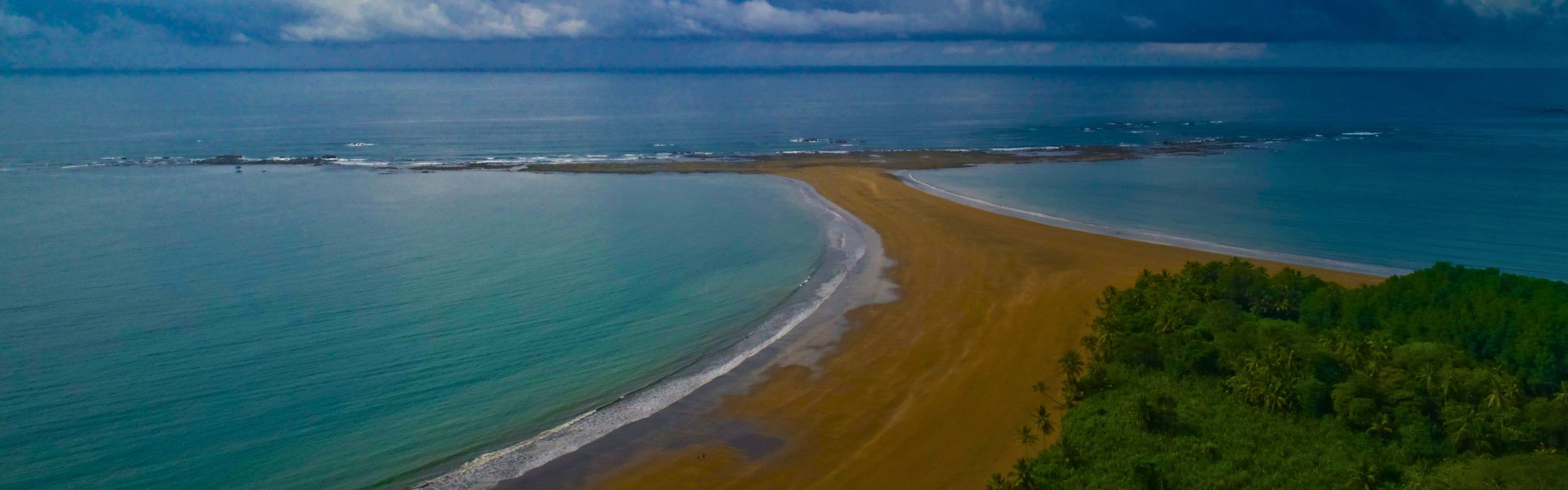
Uvita is home to Marino Ballena National Park, famous for the whale's tail sandbar at Punta Uvita and the humpback whales that return each season. Law 10173, approved in April 2022, established it as a national park. Its four sectors are Uvita, Colonia, Ballena and Piñuela.
For buyers, the park changes the picture in three ways:
- The protected area is not for sale. Coastal land inside the park follows the park's own legal regime, not ordinary municipal concessions.
- Bordering the park does not extend a property. A home next to the park does not include the beach or the protected strip in front of it.
- Beach access stays public. The law guarantees public access to the park's beaches, so no property can claim a private entrance to them.
None of this makes Uvita less appealing. For many of our clients it is the opposite.
The beach isn't the boundary of the property. It's the neighbor that never gets built on.
Beachfront properties in Ojochal: where exactly is the coastline?
Ojochal has become one of the most sought-after communities on the Costa Ballena, known for its restaurants, its international community and its quiet jungle setting. It is also a good example of why a place name is a starting point, not a legal category.
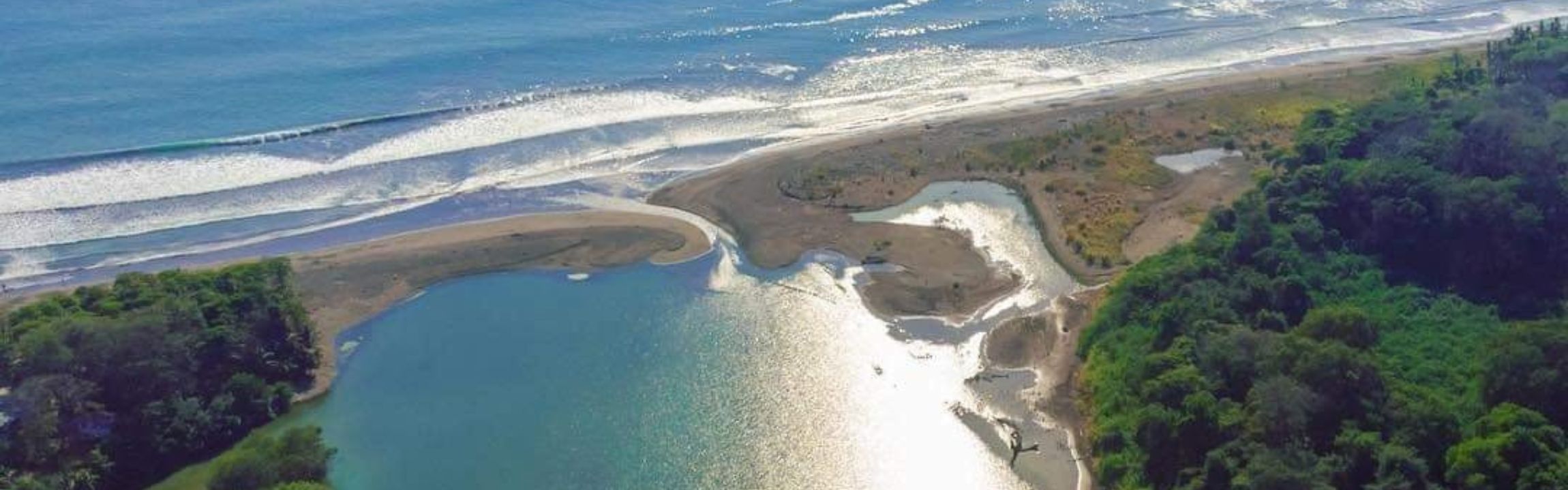
The coastline near Ojochal includes distinct beaches, among them Playa Tortuga, where a river meets the sea, and Playa Ventanas, known for its rock formations. The ICT inventory lists an approved plan for the Punta Ventanas sector.
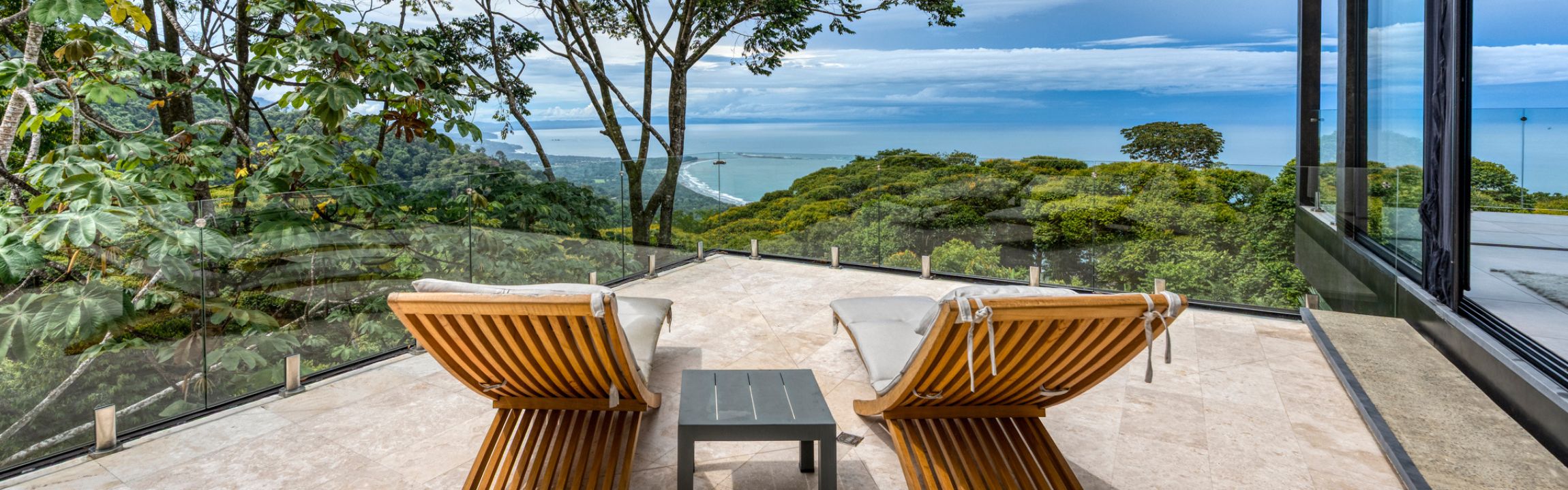
Many properties marketed as beachfront properties in Ojochal sit on the hillsides above the coast. That is often where the views are strongest. Others sit close to the shore or near river mouths. Each one carries its own status, so the useful question is always the same: where, precisely, is this property on the map?
Get that answer first, and everything else becomes easier to evaluate.
What should you ask before making an offer on beachfront property?
Every coastal purchase in Costa Rica benefits from the same short list of questions. Ask them early, and the answers will tell you most of what you need to know:
- Is this titled property or a concession?
- If it is a concession, when does the current term end, and is the canon up to date?
- Which coastal plan covers this exact location, and what use does it allow?
- Is the property near a mangrove, estuary or river mouth?
- Does it border a protected area such as Marino Ballena National Park?
- How is legal access to the property itself provided?
Every buyer should have an independent Costa Rican attorney and a licensed surveyor confirm the answers for the specific property. A listing description, however accurate, is not a substitute for that review.
Clear answers to these six questions are what make a coastal purchase feel calm rather than complicated.
FAQ
Q1: Can foreigners own beachfront property in Costa Rica?
A: Yes. Foreigners can own titled private property in Costa Rica with the same rights as citizens. Land inside the 200 meter maritime zone is different. It is generally held through a municipal concession, and an individual foreign applicant needs at least five years of residency in the country to hold one.
Q2: What is a ZMT concession in Costa Rica?
A: A ZMT concession is a municipal permit to use and enjoy a defined area of the restricted zone, the 150 meters behind the public beach. It is granted for a term of 5 to 20 years. It carries an annual fee called a canon, and it does not transfer ownership of the land.
Q3: Is the beach in front of a beachfront home in Costa Rica private?
A: No. The first 50 meters from the ordinary high tide line are a public zone in Costa Rica, open to everyone, and cannot be privatized. A beachfront home can sit close to the sand, but the beach itself and the public strip in front of it always remain public.
Q4: Can a ZMT concession be renewed or sold?
A: Yes, within the rules. A concession can be renewed when the holder applies on time, is current on the canon and meets its obligations, but renewal is never automatic. A transfer to a new holder requires municipal approval and registration, not just a private agreement between buyer and seller.
Q5: Does Dominical have a coastal regulatory plan?
A: Yes. Dominical's partial coastal plan was published in 1994. The ICT's August 2025 inventory lists several approved plan entries for the area, including Punta Dominical and expansion sectors. Because the coast is divided into sectors, the plan that applies depends on the exact location of each property.
Q6: Can I buy beachfront land inside Marino Ballena National Park in Uvita?
A: No. Marino Ballena became a national park under Law 10173 in 2022, and coastal land inside it follows the park's own legal regime rather than ordinary municipal concessions. Homes near the park are bought and sold like other property, but the protected beach is never part of a purchase.
Q7: Are all beachfront properties in Ojochal titled?
A: Not necessarily. Ojochal is a community, not a single legal category, and its coastline includes different beaches such as Playa Tortuga and Playa Ventanas. Some properties marketed as Ojochal sit well inland, others near the shore, so each one's status depends on its exact location and registration.
Q8: Is a property outside the maritime zone if it is more than 200 meters from the beach?
A: Not always. Where there are mangroves or estuaries, the restricted zone can be measured from them rather than from the open beach. A professional survey and title review confirm where a specific property sits, which is more reliable than the distance to the sand listed in an ad.
Summary / Key Takeaways
- Want full ownership with the fewest conditions? Focus on titled property just inland from the maritime zone. Dominical, Uvita and Ojochal all offer ocean-view homes and lots that fit this profile.
- Want to be steps from the sand? A concession can work well, with a residency plan, a clear view of the term and canon, and confirmation of the coastal plan that applies.
- In both cases, location decides the answer, not the listing description.
Our Dominical office has been working this coastline since 1996. With 25+ years of local experience, our team can walk you through titled and concession options from Dominical to Ojochal, including Bella Vista Estates. Reach out to start with the map, and let the right property follow.
The coast will always belong to everyone. The goal is finding your place beside it.
Coldwell Banker Vesta Group
Rooted in Costa Rica. Trusted Worldwide.
This article is for general information only and does not constitute legal advice. Costa Rican coastal regulations and coastal plans can change. Buyers should confirm the status of any specific property with an independent Costa Rican attorney and licensed surveyor.