

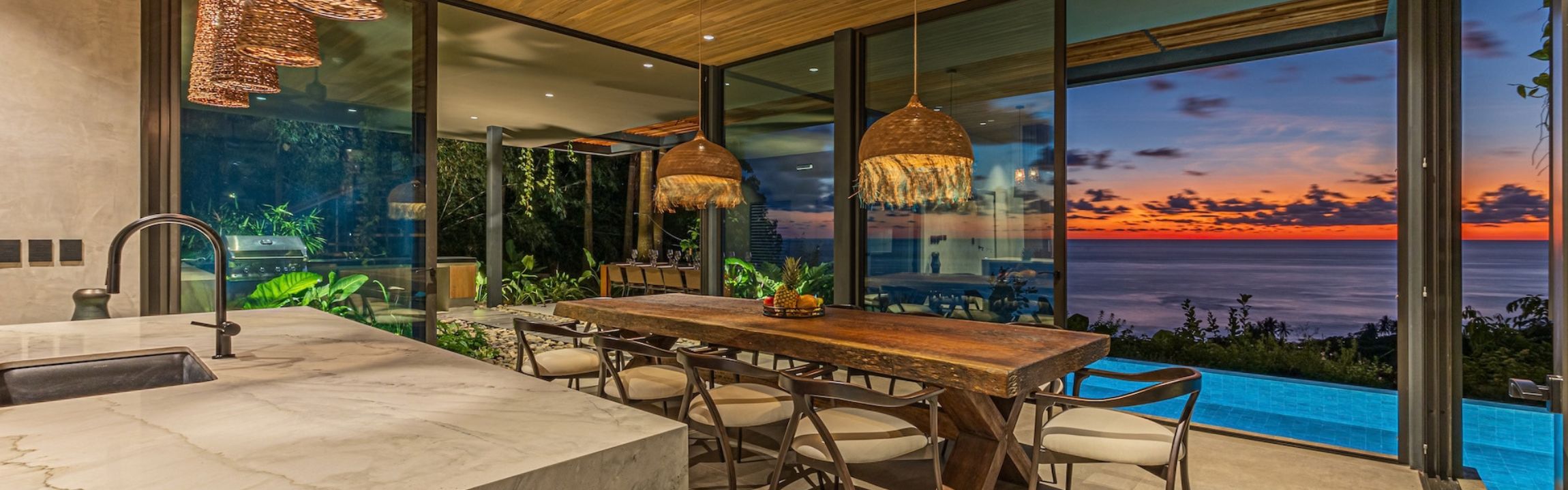
Yes, foreigners can buy property in Costa Rica, and residency is not required. International buyers can hold titled homes, condos and land in their own name with essentially the same rights as Costa Rican citizens. The exception is concession land in the coastal Maritime Zone. Safety comes from the process: independent counsel, regulated escrow and parcel-level due diligence.
Most people who ask this question are already standing somewhere in their imagination. A hillside above Dominical with the Pacific below. A quiet lot near Ojochal. A house in Uvita close enough to walk to dinner.
The legal answer to whether you can own that place is simple: yes. The more useful question is what it takes to own it well.
After more than 20 years working in Costa Rica's real estate market, I've learned that the buyers who end up happiest are rarely the ones who moved fastest. They are the ones who understood early that a title is only one layer of a property. Access, water, permits, slope and season decide what a property is actually worth to live in.
Can Foreigners Own Property in Costa Rica With the Same Rights as Citizens?
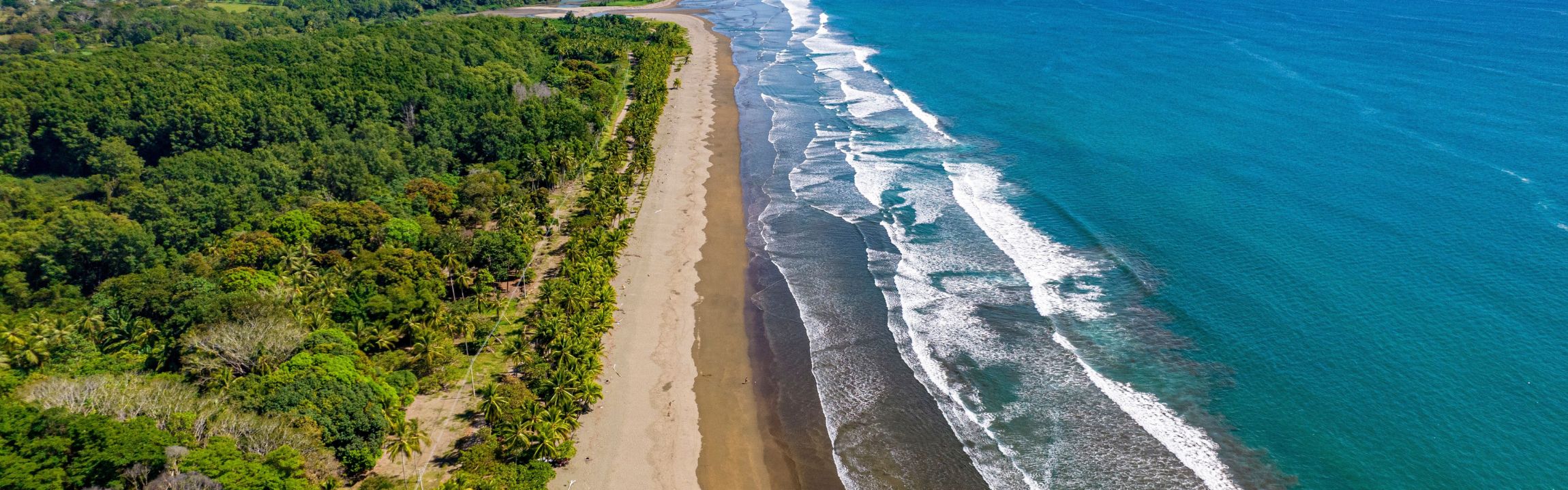
For titled property, yes. Costa Rica's Constitution extends the same individual rights to foreigners as to citizens, subject to specific legal exceptions, and protects private property. A foreign buyer can register a home, condominium or parcel at the National Registry (Registro Nacional) with full rights to use, rent, sell or pass it on.
The meaningful exception is the coast. Under the Maritime Zone Law (Ley 6043 of 1977), the 200 meters measured from the ordinary high-tide line form the Zona Marítimo Terrestre:
| Zone | Distance from high tide | What a buyer can hold | Foreign-buyer position |
|---|---|---|---|
| Public zone | First 50 meters | Nothing; public land | No private ownership for anyone, regardless of citizenship |
| Restricted zone | Next 150 meters | A concession, not title | Foreigners with under five years of residency cannot hold a concession; companies that are more than 50 percent foreign-owned are also restricted |
| Outside the zone, or legal exceptions | Beyond 200 meters, or exempt areas | Fee-simple title | Same rights as a Costa Rican national |
Source: Ley 6043, Maritime Zone Law (Ley sobre la Zona Marítimo Terrestre), 1977. Distances are measured from the ordinary high-tide line.
That is why "beachfront" is a marketing word, not a legal category. A parcel near the ocean may be titled (in some exceptional cases, even land within the restricted zone holds title), or it may be a concession. The listing description does not decide which. The registry and the municipality do.
Do I Need Residency to Buy Property in Costa Rica?
No. You can purchase and register titled property on a passport, including during a tourist stay. Ownership and immigration status are separate tracks.
Buying property also does not grant residency on its own. A qualifying investment can support a separate application for temporary investor residency, and this is where 2026 brings a real change. Law 9996 lowered the investor threshold from $200,000 to $150,000. The five-year window for the law's tax exemptions closed on July 14, 2026, and published guidance since then has not been consistent, with some sources citing $150,000 and others $200,000 for new applications.
Our recommendation: plan around the $150,000 threshold with a margin, because the investment is measured against the colón, Costa Rica's legal tender, and a weaker dollar can narrow it. Get written confirmation from an immigration attorney or the DGME (Costa Rica's immigration authority) before you structure a purchase around residency.
One structural detail matters more than most buyers expect. Under the Law 9996 regulations, an investment structured through a company requires additional steps, such as registering the company as a taxpayer and increasing its stated capital to match the investment, none of which was needed before. Owning the property in your personal name keeps the requirements lighter, so discuss the structure with your attorney early.
Decide the residency question before closing, not after.
What Is the Step-by-Step Process to Buy Property in Costa Rica?
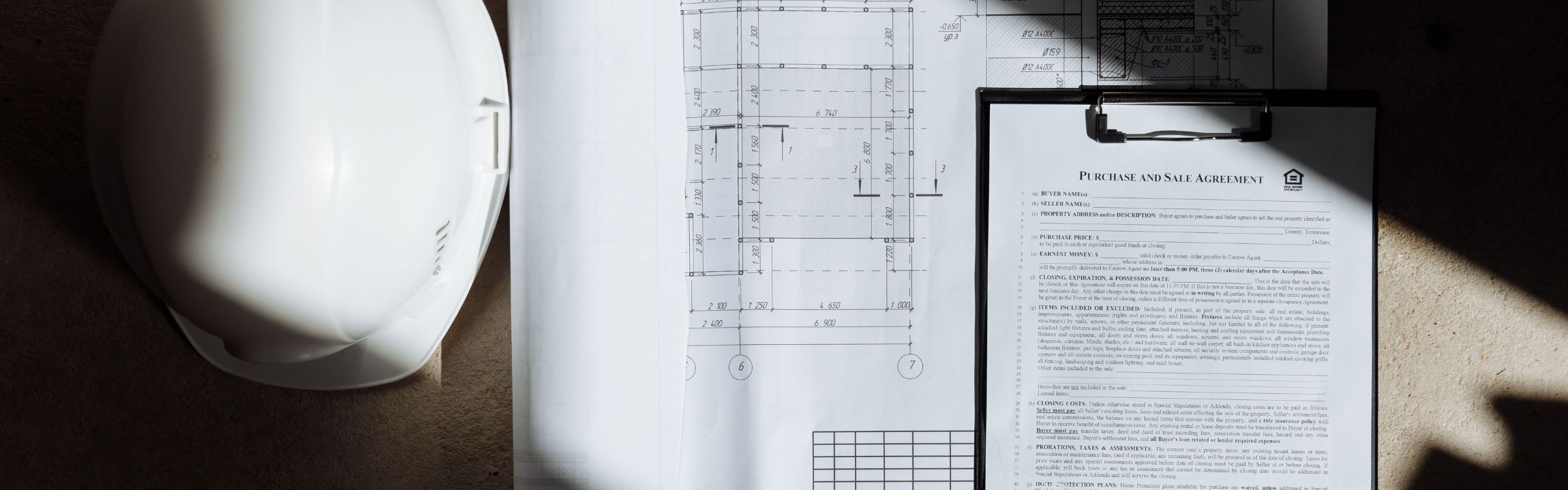
Timelines and deposits are negotiated deal by deal, so treat these as stages, not fixed rules.
-
Define the use and the full budget. A full-time home, a vacation rental, a commercial property and raw land to build on each require different diligence. Budget beyond the price for closing, escrow, inspection, survey, insurance and early repairs.
-
Choose a regional broker. Brokers who work professionally must register with SUGEF, the Costa Rican agency that supervises banks and financial institutions, mainly for anti-money-laundering purposes. There is no licensing exam or unified national MLS comparable to North America's, so confirm registration and weigh local transaction history and micro-market knowledge.
-
Retain independent counsel. Hire a Costa Rican notary who represents you (by law, every notary in Costa Rica is also an attorney), ideally before signing an offer. Only a notary can draft and register the transfer deed.
-
Pull the core documents early. Request the folio real (property registration number) and plano catastrado (registered survey) before negotiating seriously.
-
Make a conditional offer. The agreement should tie deposit refunds to the results of legal, technical, municipal and, where relevant, Maritime Zone review.
-
Open regulated escrow. Deposits and purchase funds should be deposited with a neutral, SUGEF-registered escrow company under written release instructions. Compliance review asks for identification and source of funds, so start early. Paying the seller directly is highly inadvisable.
-
Complete legal due diligence. Your attorney confirms ownership, liens, easements, municipal taxes, permits, access to a legal source of water, land use (uso de suelo) and, for condos, the bylaws and dues.
-
Complete physical due diligence. Commission independent inspection for homes and the right specialists for land: surveyor, engineer and, on slopes, a geotechnical review.
-
Review the deed and closing statement. Confirm whose name title will vest in and that the structure matches your tax, estate and residency plans.
-
Close and register. The notary executes the public deed and submits it to the National Registry, where processing averages about two weeks. The owner, usually with the help of the notary, must then file an assessment with the municipality declaring the new ownership and fiscal value. Your transaction is finished when registration is confirmed, not when you sign.
-
Update water and electric meters. Once registration is complete, transfer the utilities into the new owner's name, which the notary usually helps coordinate.
The process isn't complicated. It's sequential. Skipping a step rarely saves time; it usually moves the cost to later.
Is It Safe to Buy Real Estate in Costa Rica?
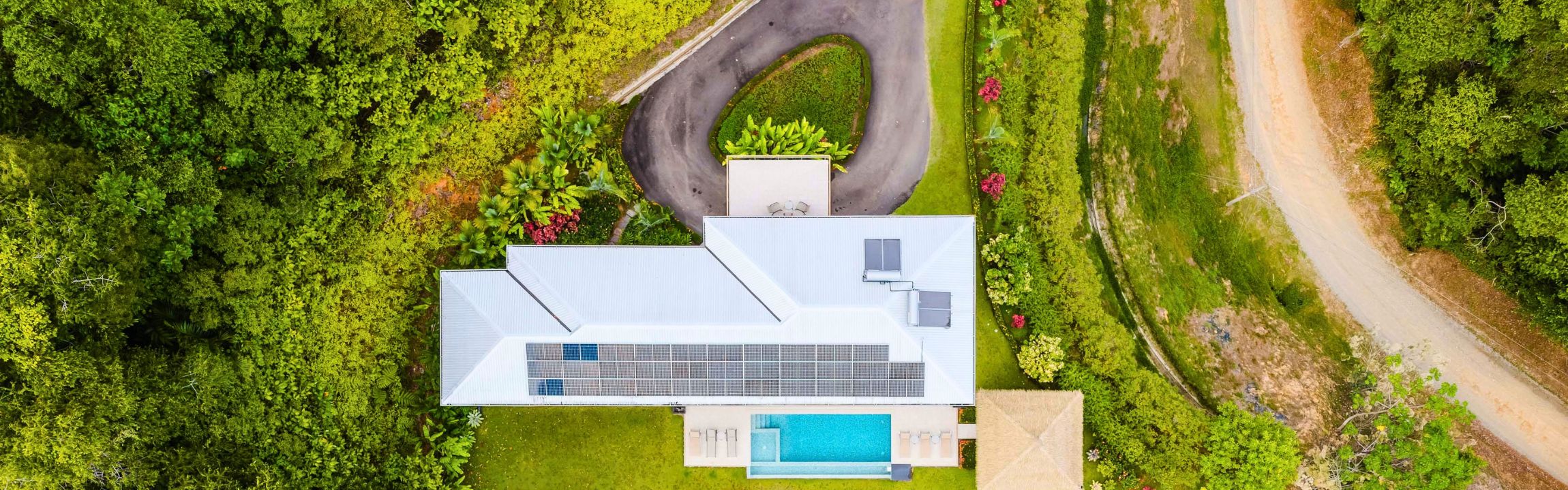
It can be. Costa Rica has a centralized public property registry, notarial control of every transfer and constitutional protection of private property.
But safety isn't a feature of the country. It's a feature of the process.
A clean title does not prove that a hillside lot is buildable, that a visible road is a legal right of way, that a spring is a lawful water source or that a guest house was permitted. Each of those needs its own evidence. The warning signs we see most often are consistent:
-
Pressure to send a deposit before attorney review or escrow is in place
-
"Everyone uses this road" offered instead of a registered easement
-
A stream or a neighbor's meter presented as proof of water rights
-
A sale of company shares promoted as a way to avoid transfer costs
-
Wire instructions changed by email
Verify any banking instructions by phone, using a number you already know, before sending funds anywhere.
Handled this way, buying in Costa Rica is less a leap of faith than a series of verifiable checks.
What Does It Cost to Buy and Own Property in Costa Rica?
The one fixed number at closing is the transfer tax: 1.5 percent of the sale price or the registered fiscal value, whichever is higher. It also applies when control of a property-holding company changes hands, so a share purchase does not sidestep it. Registry fees, stamps, notary fees and VAT on professional services add to the total. Coldwell Banker Costa Rica's 2026 International Buyer's Guide puts average closing costs at roughly 4 percent, not including escrow agent fees, commonly split between buyer and seller, though the split is negotiable. Your attorney's itemized estimate is the only number to plan on.
Holding costs are modest by North American standards. Annual property tax, set by law, is 0.25 percent of the value registered with the municipality, and higher-value homes may also fall under the solidarity (luxury home) tax. In practice, maintenance, insurance and management often cost more than the tax itself.
If you rent or sell, plan ahead:
-
Rental income is generally taxed at 15 percent applied to 85 percent of gross income. If the owner has properly registered employees, it is treated as ordinary income instead, with applicable expenses deductible.
-
Capital gains are taxed at 15 percent, with an exemption for a primary residence.
-
Property acquired before July 1, 2019 can elect a one-time 2.25 percent rate on the sale price, on the first sale only.
-
When the seller is not domiciled in Costa Rica, the buyer withholds 2.5 percent of the price toward that tax.
On financing, our May 2026 guide to financing real estate in Costa Rica as an international buyer found that local banks typically require 20 to 40 percent down, and land is harder to finance.
The numbers are friendly. The surprises come from costs nobody itemized.
What Changes When You Buy Dominical Costa Rica Real Estate?
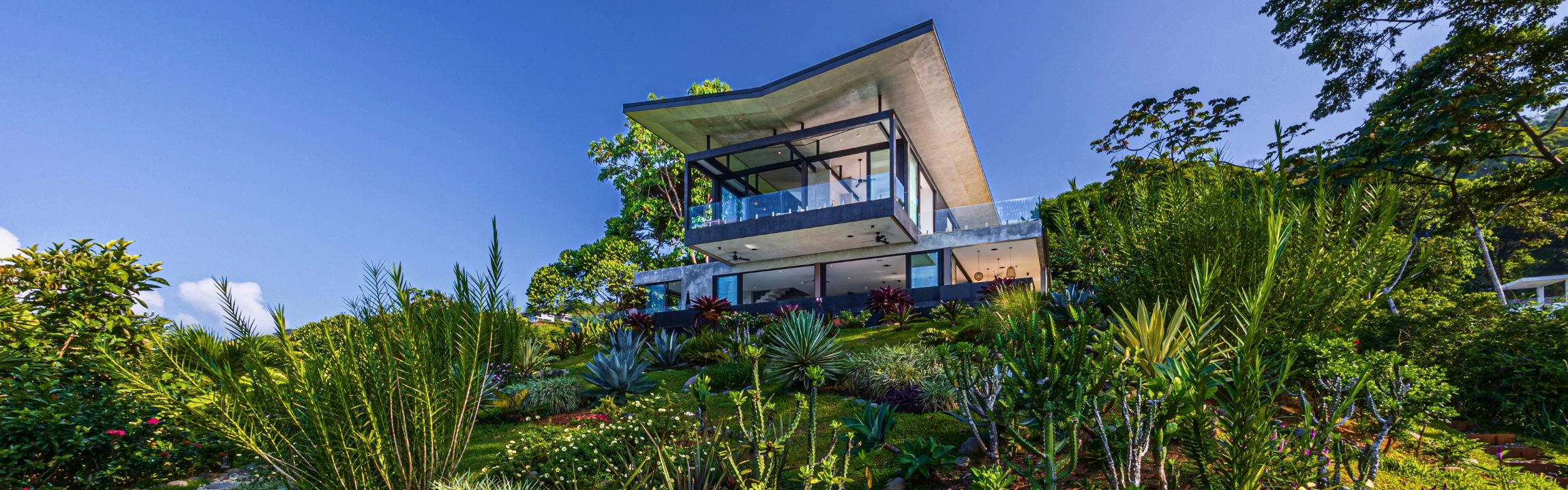
Dominical is where many buyers first feel the pull of the Southern Zone: a surf town with a rainforest behind it and ocean-view ridges climbing above the coast. That terrain is exactly what makes due diligence here different.
Two homes with similar views can have very different ownership costs. Road grade, rainy-season access, drainage, retaining walls and water reliability shape maintenance, construction cost and resale. Before valuing the view, ask:
-
Is access a registered easement or public road, and who maintains it?
-
Does a parcel-specific water letter from AyA or the local ASADA exist for this exact folio?
-
Were the retaining walls engineered and permitted?
-
Is the view protected by topography, or only by today's vegetation?
-
Is there a registered view easement that protects it from future construction?
The same logic extends along Costa Ballena. Uvita offers services and a year-round community, but its hillside parcels need the same scrutiny. In Ojochal, land value often turns on drivability and earthwork. If land is on your list, our guide to buying land in Costa Rica's Southern Region goes deeper.
In this part of Costa Rica, the land tells you what it will cost to live on it, if you ask the right questions first.
Key Figures at a Glance
| Item | Figure | Source and date |
|---|---|---|
| Maritime Zone | 200 m (50 public + 150 restricted) | Ley 6043, 1977 |
| Investor residency threshold | $150,000 under Law 9996; tax exemption window closed July 14, 2026 | Law 9996 (2021) |
| Transfer tax | 1.5% of price or fiscal value, whichever is higher | Property Transfer Tax Law (Law 6999, 1985) |
| Annual property tax | 0.25% of registered value | Property Tax Law (Law 7509, 1995) |
| Capital gains | 15% on gain; 2.25% option for pre-July 2019 assets | Law 9635, effective July 1, 2019 |
| Typical bank down payment | 20% to 40% | Vesta Group financing guide, May 8, 2026 |
Figures as of October 2026. Confirm current requirements with a licensed Costa Rican attorney before making a purchase decision.
FAQ
Q1: Can a US citizen buy property in Costa Rica?
A: Yes. U.S., Canadian and European citizens can buy titled property in Costa Rica with a valid passport and register it at the National Registry in their own name. Residency is not required. The main exception is concession land inside the 200-meter Maritime Zone, which follows separate rules for foreign buyers.
Q2: Does buying property in Costa Rica give you residency?
A: Not automatically. A qualifying purchase can support a separate investor residency application with the DGME, Costa Rica's immigration authority. Plan around the $150,000 benchmark with a margin for dollar depreciation against the colón, and confirm current requirements with an immigration attorney.
Q3: Can foreigners buy beachfront property in Costa Rica?
A: Yes, with limitations. The first 50 meters from the high-tide line are public and cannot be owned by anyone. The next 150 meters are normally concession land, which foreigners with under five years of residency cannot hold. Titled parcels inside the zone are an exception and carry no foreign-ownership restriction.
Q4: How much are closing costs when buying property in Costa Rica?
A: Closing costs average roughly 4 percent of the purchase price, excluding escrow agent fees, and are commonly split between buyer and seller. The fixed piece is the 1.5 percent transfer tax, charged on the sale price or registered fiscal value, whichever is higher. Registry, notary and VAT make up the rest.
Q5: Should I buy Costa Rica property in my name or through a corporation?
A: Either can work, and neither is automatically better. A corporation can help with liability or estate planning, but it adds annual filings and costs. If you plan to apply for investor residency, holding title in your personal name is lighter on the requirements, so settle the residency question with counsel before closing.
Q6: Can I buy property in Costa Rica remotely?
A: Yes. An authenticated power of attorney lets your Costa Rican attorney, or another proxy, sign for you, whether title goes in your name or an entity's. Escrow can be funded by international wire after compliance review. Still, visit the property or send an independent inspector, surveyor and engineer before your deposit becomes nonrefundable.
Q7: What taxes do foreigners pay on property in Costa Rica?
A: Annual property tax is 0.25 percent of the value registered with the municipality, and higher-value homes may also owe the solidarity tax. Rental income is taxed at 15 percent on 85 percent of gross income, unless the owner has registered employees. Gains on a sale are taxed at 15 percent, with a primary-residence exemption.
Q8: Can foreigners get a mortgage in Costa Rica?
A: Yes, though terms differ from North America. Several Costa Rican banks lend to foreigners on titled homes, and Vesta Group's May 2026 financing guide puts typical down payments at 20 to 40 percent. Land and rural parcels are harder to finance, and seller financing is relatively common in the Southern Zone.
Summary / Key Takeaways
-
Coastal property? Confirm titled or concession status in writing before anything else. It changes what you are actually buying.
-
Residency part of the plan? Decide it before choosing how to hold title, and plan around the $150,000 threshold with an exchange-rate margin, confirmed by immigration counsel.
-
Ready to make an offer? Fund nothing until independent counsel, regulated escrow and parcel-level diligence are in place. Get those right, and the rest of the process is paperwork.
Explore Dominical listings
Coldwell Banker Vesta Group has been rooted on the South Pacific coast for more than 25 years, with our headquarters in Dominical. Explore current Dominical Costa Rica real estate, or start with. Our team can walk you through the property and connect you with the independent attorneys, inspectors and engineers who should review it before you commit.
The people who build good lives here rarely found the perfect property. They found a sound one, understood it fully, and gave it time to become home.
Coldwell Banker Vesta Group
Rooted in Costa Rica. Trusted Worldwide.
This article provides general information as of October 2026 and is not legal, tax, immigration or financial advice. Tax rates, residency thresholds and fees can change; immigration guidance in particular has varied since Law 9996's tax exemption window closed in July 2026. Market cost ranges are published estimates, not quotes. Consult a licensed Costa Rican attorney, immigration specialist and tax advisor before making any purchase decision.