


Closing costs in Costa Rica real estate average roughly 4 percent of the purchase price, not including escrow fees. The one fixed number is a 1.5 percent transfer tax. Registry fees, stamps, notary fees and VAT make up the rest, and buyer and seller commonly split the total, though the split is negotiable.
The offer is accepted. Maybe it's a hillside home above Dominical with the Pacific filling the windows, or a quiet lot near Ojochal where the jungle does most of the talking.
This is usually when buyers ask the question that should have come first: what will it actually take to close?
After more than 20 years in Costa Rica's real estate market, I've learned that closing itself is rarely the surprise. The costs follow a predictable structure, and your attorney can put a number on each one before you sign. The surprises come from the items nobody itemized.
So let's walk through what gets itemized, and what to ask about the rest.
How Does Closing Work When You Buy Property in Costa Rica?
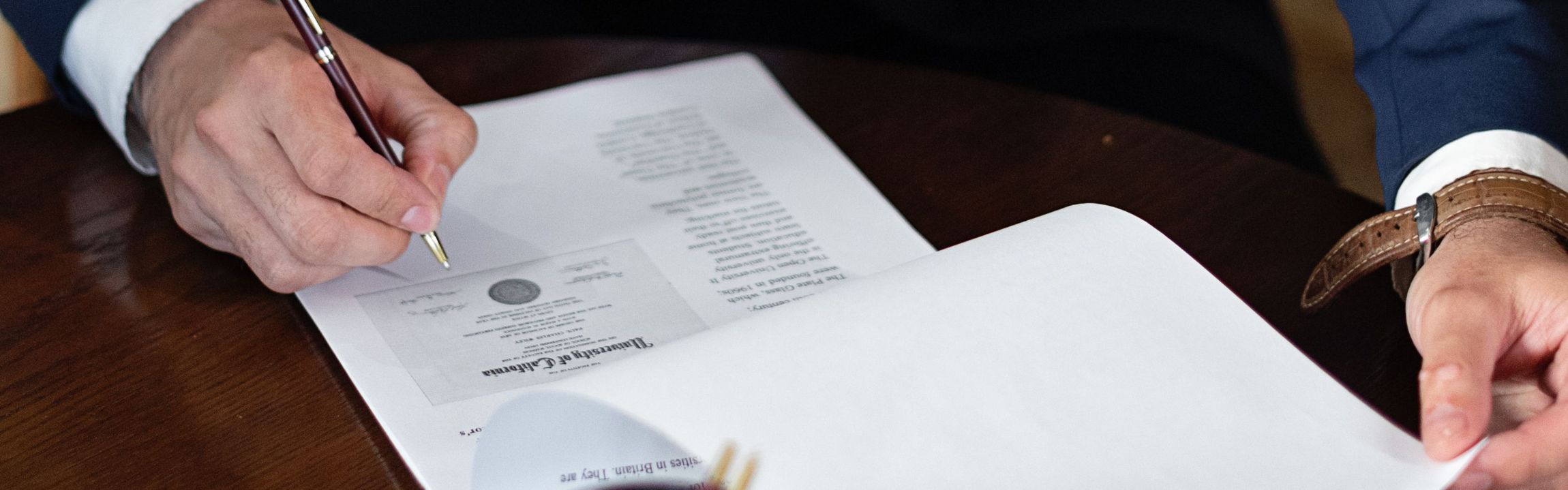
Every transfer of titled property in Costa Rica runs through a notary. By law, every notary in Costa Rica is also an attorney, and only a notary can draft the transfer deed (escritura) and register it at the National Registry (Registro Nacional). Ideally, that notary represents you and is retained before you sign an offer.
Closing is a sequence, not a single day:
-
Funds move through a neutral, SUGEF-registered escrow company under written release instructions. Compliance review asks for identification and source of funds, so start early.
-
Your attorney reviews the deed and the closing statement, including whose name title will vest in.
-
The notary executes the public deed and submits it to the National Registry, where processing averages about two weeks.
-
The owner, usually with the notary's help, files an assessment with the municipality declaring the new ownership and fiscal value.
-
Water and electric meters are transferred into the new owner's name.
Your purchase is finished when registration is confirmed, not when you sign. Every cost below attaches to one of those steps, which is why knowing the order makes the bill far easier to read.
What Is the Property Transfer Tax in Costa Rica?
The property transfer tax is the one fixed number at closing: 1.5 percent of the sale price or the registered fiscal value, whichever is higher, under the Property Transfer Tax Law (Law 6999).
Two details matter for planning. Because the base is whichever value is higher, a low registered value never brings the tax below 1.5 percent of the price you actually pay. And the tax also applies when control of a company that holds the property changes hands.
A sale of company shares promoted as a way to avoid transfer costs isn't a shortcut. It's one of the warning signs we see most often. The same goes for any suggestion that the deed show something other than the real price. Put either question to your attorney before anything is signed.
Who pays the transfer tax is part of the negotiation, and the answer belongs in the purchase agreement. Of everything in a closing budget, this is the line that moves least, which makes it the right place to start.
What Goes Into the Cost to Buy a House in Costa Rica?
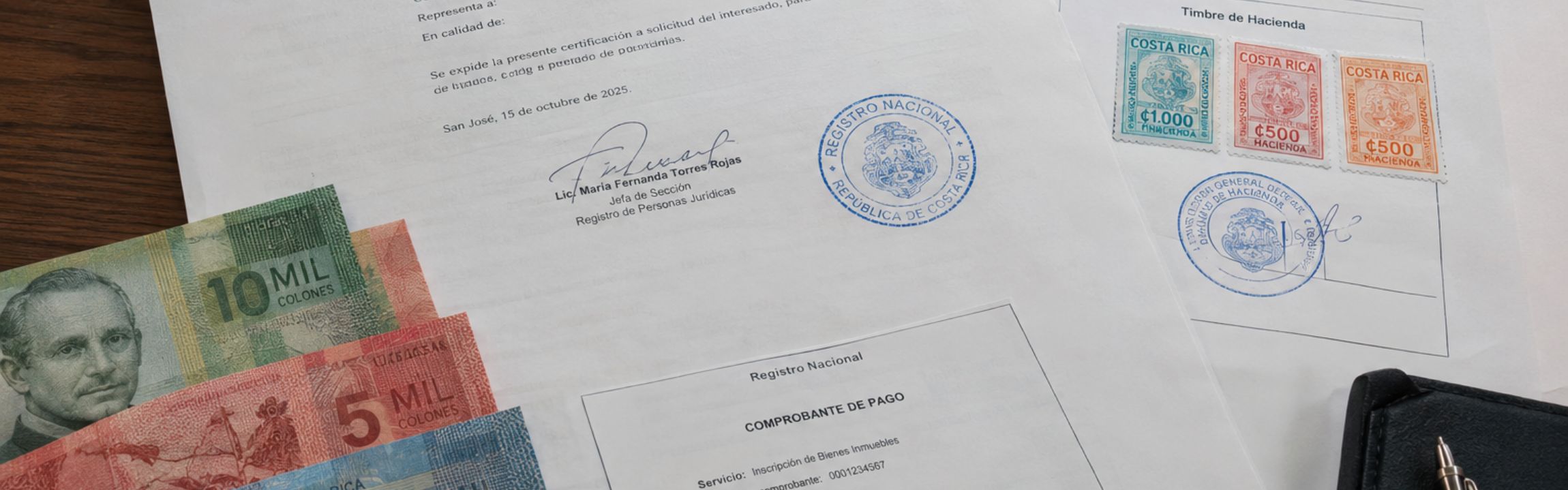
Beyond the transfer tax, registry fees, stamps, notary fees and VAT on professional services add to the total. Coldwell Banker Costa Rica's 2026 International Buyer's Guide puts average closing costs at roughly 4 percent of the price, not including escrow agent fees.
| Component | What it covers | How to budget it |
|---|---|---|
| Transfer tax | Tax on the transfer of the property | 1.5% of price or registered fiscal value, whichever is higher |
| Registry fees and stamps | Recording the deed at the National Registry | Itemized by your notary |
| Notary fee and VAT | Drafting, executing and registering the deed, plus VAT on professional services | Written quote before you engage |
| Escrow agent fee | Holding and releasing funds under written instructions | Billed separately; not part of the 4% average |
Source: Coldwell Banker Costa Rica, 2026 International Buyer's Guide; Property Transfer Tax Law (Law 6999).
The notary's fee covers the deed, not everything around it. Title due diligence, survey review, inspection and corporate setup may be billed separately. The fee isn't the risk. The unitemized fee is.
Ask for an itemized estimate in writing and compare it with the roughly 4 percent benchmark. If it lands far from that number in either direction, ask why. There is usually a reason, and you want to hear it before closing day, not on it.
What Does It Cost to Close on a $400,000 Home Near Dominical?
Here is that benchmark applied to a hypothetical $400,000 home near Dominical. It's illustrative, not a quote.
| Item | Approx. USD |
|---|---|
| Total closing costs at roughly 4% | About $16,000 |
| Of which: transfer tax at 1.5% (when the price exceeds the registered fiscal value) | $6,000 |
| Of which: registry fees, stamps, notary fee and VAT | About $10,000 |
| Each side's share, if split equally | About $8,000 |
| Escrow agent fee | Billed separately |
Illustrative example based on the roughly 4 percent average in Coldwell Banker Costa Rica's 2026 International Buyer's Guide. Not a quote.
A few things move the number. A share purchase still triggers the transfer tax. Holding title through a corporation adds annual filings and costs. Financing adds its own documentation, and our May 2026 guide to financing real estate in Costa Rica as an international buyer found that local banks typically require 20 to 40 percent down, with land harder to finance.
Your attorney's itemized estimate is the only number to plan on. This example simply tells you whether that estimate makes sense.

What Changes When the Seller Lives Outside Costa Rica?
When the seller is not domiciled in Costa Rica, the buyer withholds 2.5 percent of the price toward the seller's capital gains tax. It's a closing-day obligation that sits on the buyer's side of the table, so confirm with your attorney how it will appear in the closing statement.
What Are Property Taxes in Costa Rica After You Close?
Closing is a one-time cost. Ownership comes with a modest annual one.
Annual property tax, set by the Property Tax Law (Law 7509), is 0.25 percent of the value registered with the municipality. On a home registered at $400,000, that works out to about $1,000 a year. Higher-value homes may also fall under the solidarity (luxury home) tax, so ask your attorney whether it applies to the property you're considering and whether the seller is current.
If you plan to rent or sell later, the rules are worth knowing now:
-
Rental income is generally taxed at 15 percent applied to 85 percent of gross income. If the owner has properly registered employees, it is treated as ordinary income instead, with applicable expenses deductible.
-
Capital gains are taxed at 15 percent, with an exemption for a primary residence.
By North American standards, holding costs here are modest. In practice, maintenance, insurance and management often cost more than the tax itself, and in the Southern Zone, the terrain has a lot to say about maintenance.
What Should You Check Before Buying a House in Dominical, Costa Rica?
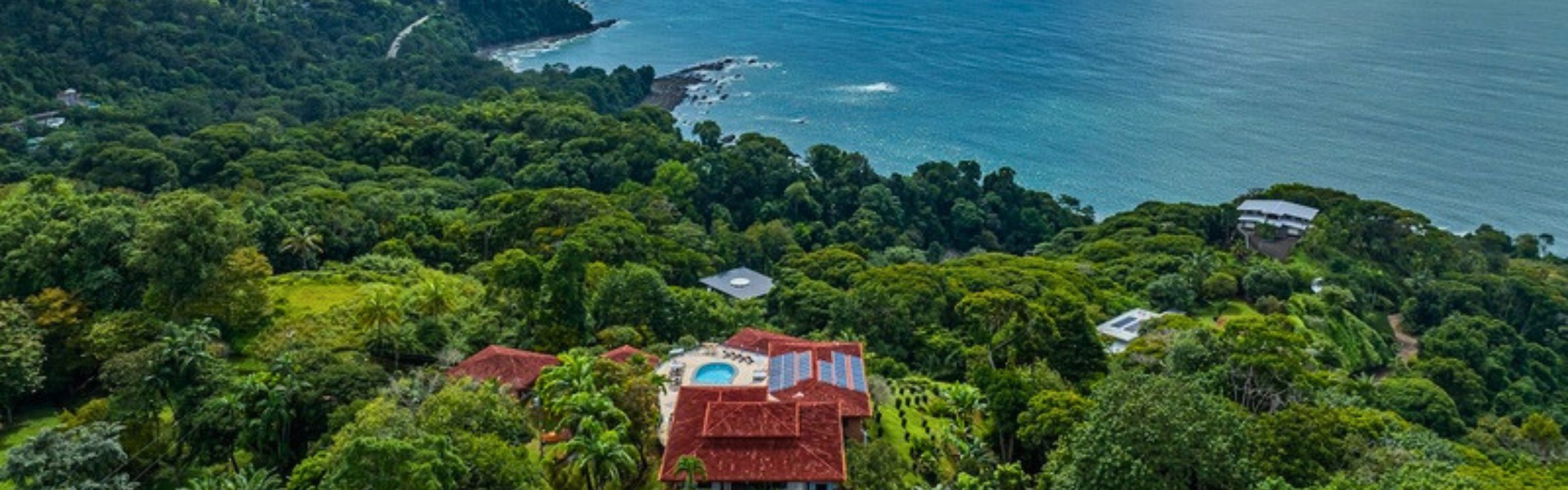
The math above applies nationwide. The terrain of the Southern Zone adds checks that protect your budget as much as your title. Two homes with similar views can have very different ownership costs, and most of the difference shows up after closing.
-
Titled or concession? Inside the 200-meter Maritime Zone, land is public or held as a concession, with limited titled exceptions. Confirm which you're buying, in writing, before anything else.
-
Registered fiscal value. The transfer tax uses the higher of price or registered value, so know that number early.
-
Municipal taxes. Your attorney's legal due diligence confirms whether they are current.
-
Survey plan (plano catastrado). Hillside and rural parcels are common here. Request it before negotiating seriously.
-
Access and water. A registered easement or public road, and a parcel-specific water letter from AyA or the local ASADA, matter more than any closing line item.
-
The split, in writing. Name who pays each closing cost in the purchase agreement.
If raw land is on your list, our guide to buying land in Costa Rica's Southern Region goes deeper. For the full purchase process, start with Buying Property in Costa Rica as a Foreigner.
In this part of the country, closing costs are the easy part. The parcel is where the real diligence lives.
Key Figures at a Glance
| Item | Figure | Source and date |
|---|---|---|
| Average closing costs | Roughly 4% of price, excluding escrow | Coldwell Banker Costa Rica, 2026 International Buyer's Guide |
| Transfer tax | 1.5% of price or fiscal value, whichever is higher | Property Transfer Tax Law (Law 6999) |
| Annual property tax | 0.25% of registered value | Property Tax Law (Law 7509, 1995) |
| Capital gains | 15% on gain; primary residence exempt | Law 9635, effective July 1, 2019 |
| Withholding, non-domiciled seller | 2.5% of price | Coldwell Banker Vesta Group buyer's guide, Oct. 2026 |
| Typical bank down payment | 20% to 40% | Vesta Group financing guide, May 8, 2026 |
Figures as of October 2026. Confirm current requirements with a licensed Costa Rican attorney-notary before closing.
FAQ
Q1: How much are closing costs in Costa Rica?
A: Closing costs average roughly 4 percent of the purchase price, according to Coldwell Banker Costa Rica's 2026 International Buyer's Guide, not including escrow agent fees. The fixed piece is the 1.5 percent transfer tax. Registry fees, stamps, notary fees and VAT on professional services make up the rest.
Q2: Who pays closing costs in Costa Rica, the buyer or the seller?
A: Closing costs are commonly split between buyer and seller, but the split is negotiable, including who pays the 1.5 percent transfer tax. Whatever you agree, put it in the purchase agreement before signing, so the closing statement your attorney prepares holds no surprises on closing day.
Q3: What is the property transfer tax in Costa Rica?
A: It is a 1.5 percent tax charged on the sale price or the registered fiscal value, whichever is higher, under the Property Transfer Tax Law. It also applies when control of a company that holds the property changes hands, so buying shares instead of the property does not avoid it.
Q4: Are escrow fees included in Costa Rica closing costs?
A: No. The roughly 4 percent average in Coldwell Banker Costa Rica's 2026 International Buyer's Guide does not include escrow agent fees. Escrow is billed separately, and it is worth paying: deposits and purchase funds should sit with a neutral, SUGEF-registered escrow company, never go directly to a seller.
Q5: How much are property taxes in Costa Rica?
A: Annual property tax is 0.25 percent of the value registered with the municipality. On a home registered at $400,000, that is about $1,000 a year. Higher-value homes may also owe the solidarity (luxury home) tax, so ask your attorney whether it applies before you buy.
Q6: What happens at closing if the seller lives outside Costa Rica?
A: When the seller is not domiciled in Costa Rica, the buyer withholds 2.5 percent of the purchase price toward the seller's capital gains tax. The obligation sits with the buyer at closing, so confirm with your attorney how it will appear in the closing statement before funds are released.
Q7: Are closing costs higher if I buy through a corporation or finance?
A: They can be. A corporation adds setup, annual filings and ongoing costs, and the transfer tax still applies if control of the company changes hands. Financing adds its own documentation, and local banks typically require 20 to 40 percent down. Ask your attorney for itemized estimates for each structure.
Q8: How long does it take to close on property in Costa Rica?
A: Timelines are negotiated deal by deal, but the final step is predictable. After the notary executes the deed, National Registry processing averages about two weeks. Your purchase is finished when registration is confirmed, not when you sign, and the new ownership is then declared to the municipality.
Summary / Key Takeaways
-
Building a budget? Plan on roughly 4 percent of the price for closing, plus escrow, and more if you finance or buy through a company.
-
Comparing estimates? Start from the 1.5 percent transfer tax and ask for every other line itemized in writing. An estimate far from the 4 percent benchmark deserves a question.
-
Ready to sign? Put the cost split in the purchase agreement, confirm titled or concession status, and make sure municipal taxes are current before funds leave escrow.
Explore Dominical Listing
Coldwell Banker Vesta Group has been rooted on the South Pacific coast for more than 25 years, with our headquarters in Dominical. Explore current Dominical Costa Rica real estate, or start with. Our team can walk you through the property and connect you with the independent attorneys, inspectors and engineers who should review it before you commit.
The people who build good lives here rarely found the perfect property. They found a sound one, understood it fully, and gave it time to become home.
Coldwell Banker Vesta Group
Rooted in Costa Rica. Trusted Worldwide.
This article provides general information as of October 2026 and is not legal, tax or financial advice. Tax rates and fees can change. The closing cost average is a published estimate, not a quote, and the worked example is illustrative. Consult a licensed Costa Rican attorney-notary before making any purchase decision.